

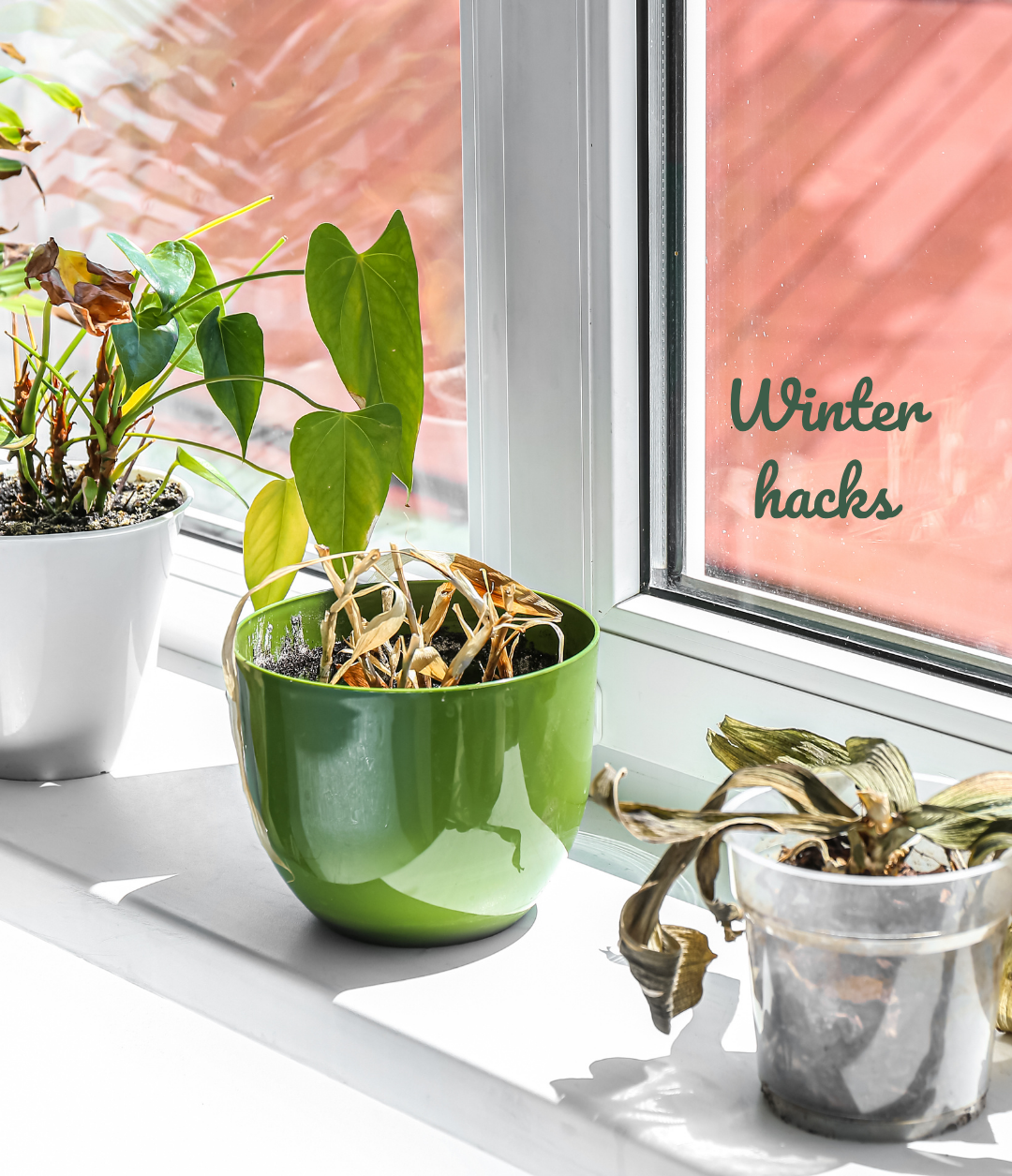
When the heating comes back on, our cozy living rooms turn into mini-deserts. It feels wonderfully warm to us, but your plants think otherwise. Especially green starters notice it: leaves develop brown, dry edges, look weaker than usual, or simply stop growing. Not exactly the vibe you’re hoping for when trying to green up your home. Luckily, you don’t need to repot in winter, nor give your plants a full wellness treatment. With a few simple humidity & smart soil hacks, you can help them through the season, no fuss, no extra costs. Step by step, you’ll learn to better understand what they need, just like a true plant parent. 🌱✨
Why Do Plants Struggle in Winter?
Indoor humidity can drop below 30% in winter, while many houseplants are used to 60–80% in their natural habitat. Tropical plants like Monstera, Ficus or Pilea are especially sensitive to:
- Dry air from heating
- Overwatering out of worry
- Too little light
Dry soil on top → brown leaf tips
Too wet below → root rot
This combination causes plenty of frustration for beginners.
Humidity Hacks for Green Starters (Simple & Gadget-Free)
You don’t need an expensive humidifier to help your plants. These hacks work just fine:
Group your plants
Plants release moisture through their leaves. By placing them together, they create their own microclimate with higher humidity.
💡 Tip: Don’t place water-loving plants (Fern, Calathea) next to drought-lovers (Cactus, Sansevieria). That’s not a good match.
Keep plants away from the heater
A radiator is to plants what a hairdryer is to your hair: damaging in the long run.
Place them instead:
- 50–100 cm further away
- On a shelf near the window
- In a corner with indirect light
Misting? Use sparingly
Many beginners think misting = raising humidity. But it only lasts 5–10 minutes. Not harmful, but not a permanent solution.
Use misting mainly for:
- Removing dust
- Plants that dry out quickly (Calathea, Kentia Palm)
- Not for plants with hairy or waxy leaves (they can develop mold)
Smart Soil Hacks: No Repotting, Just Smarter Watering
Winter is not the time to repot, because plants are resting. But you can manage water and soil more wisely to reduce stress.
The smart winter rule: “Dry on top, moist deeper down”
- Let the top 2–3 cm of soil dry out
- Keep the deeper layers lightly moist
- This prevents both root rot and dry leaf tips.
How to do this without repotting?
A couple smart tricks:
✔ Use room-temperature water
No cold shock for roots.
✔ Water along the edge of the pot
So soil moistens gradually, not all at once.
✔ Use a wooden skewer or chopstick
Insert it 5–10 cm into the soil:
- Dry when pulled out? Time to water.
- Wet when pulled out? Wait a bit longer.
💡 This is basically your “smart soil tool” without buying anything.
Bonus: Mini Humidifier Hacks (Already in Your Home)
No fancy devices needed. Try:
🥣 A bowl of water on the radiator
Slowly evaporates, raising local humidity.
💦 Place plants in the bathroom during a shower
Perfect for tropical lovers (Calathea, Fern, Philodendron).
🧽 Wipe leaves with a lightly damp cloth
Removes dust, helping plants breathe & absorb light better.
When Is It Time for Fresh Potting Soil?
Not now, but watch for these signs in spring (March/April):
- Roots pressing against the pot or growing out of the drainage hole
- You need to water more often
- The plant stops growing, even in good light
That’s when repotting with a light, moisture-retaining mix makes sense, helping your plant thrive into summer.
🪴 Winter = survive & protect
🌞 Spring = grow & repot
Conclusion: Smart Hacks, No Stress
Winter isn’t the best time to repot, but you can help your plants with humidity & smart soil hacks and a little attention to how wet (or dry) the soil is. By:
- Grouping plants
- Keeping them away from the heater
- Watering smartly (dry on top, moist deeper down)
- Using simple household humidifier tricks
…you’ll make a big difference without spending a penny.
Want to learn how to repot with the right soil in spring? Keep following Floraholic and grow step by step alongside your plants. 💚🌱

Leave a Reply